Owning Land in Colorado-Water Rights vs. Well Permits (What You Need to Know)
So, you’re looking at a smaller residential lot in a Colorado subdivision, and you’re wondering: “Does this property come with water rights?” It’s one of the most common questions we get from buyers. But here is a quick insider secret: if you are comparing Colorado water rights vs well permit requirements for a typical residential lot, you probably don’t need formal water rights—you just need a well permit.
In Colorado, “water rights” and “qualifying for a domestic well” are two completely different legal concepts. Understanding Colorado water rights vs well permit differences is crucial, because confusing the two is incredibly common, and misunderstanding them can lead to a very dry (and expensive) mistake. Let’s break down the differences so you can navigate your Colorado land purchase like a pro.
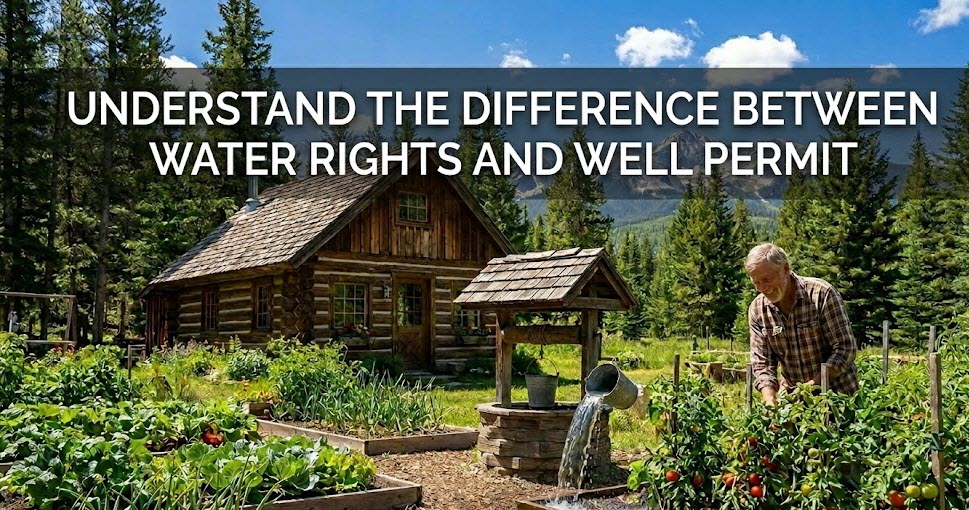
1. What Are Colorado “Water Rights”? (The Big Picture)
Colorado operates under a legal doctrine known as Prior Appropriation (often called “first in time, first in right”). In simple terms, water in Colorado is treated like real estate—it can be bought, sold, and owned completely separate from the land itself.
- What it means: Just because a river runs through a property, or there is water underground, does not mean you own the right to use it.
- Who needs them: True water rights are usually held by agricultural operations, massive ranches, or municipal water districts. They dictate exactly how much water you can divert from a source and when.
- The Reality for Small Lots: When you buy a small residential lot in a subdivision, it is highly unlikely that formal water rights are attached to the deed. And honestly? You don’t want or need them. Managing a legal water right involves water courts, strict usage histories, and massive legal fees.
2. What is a Colorado Well Permit? (The Residential Reality)
If your small subdivision lot doesn’t have municipal city water, you will need to drill a household well. To do this, you don’t buy a water right; instead, you apply for a Well Permit from the Colorado Division of Water Resources (DWR).
For smaller residential lots, well permits generally fall into two main categories:
Household-Use Only Permits
If your lot is under 35 acres (which most subdivision lots are), you will most likely qualify for a Household-Use Only permit.
- What you CAN do: Use the water inside your primary home (for drinking, showers, toilets, and cooking).
- What you CANNOT do: Use the water outside. This means no lawn irrigation, no large gardens, and no filling up large pools or watering livestock.
Domestic and Livestock Permits
Generally, these are reserved for parcels 35 acres or larger, or properties inside specific subdivisions that have a pre-approved “augmentation plan” (a legal agreement where water is replaced elsewhere in the stream system to allow for outdoor use).
- What it allows: Inside home use, plus watering your domestic pets, livestock, and irrigating up to one acre of land/garden.
Summary: Water Rights vs. Well Permits
| Feature | Colorado Water Rights | Residential Well Permits |
|---|---|---|
| What is it? | Legal ownership of a specific share of water. | A state-issued permit to pump groundwater. |
| Can it be sold separately? | Yes, completely independent of the land. | No, it is tied directly to the property/well. |
| Who is it for? | Farmers, ranchers, cities, and major developers. | Everyday homeowners building a house. |
| Typical Lot Size | Massive acreage or historic agricultural land. | Any size (Household-use typically under 35 acres). |
3 Things to Check Before You Buy a Subdivision Lot
If you are eyeing a smaller parcel in Colorado, skip the “water rights” question and do this due diligence instead:
- Check the Subdivision Rules (HOA/Covenants): Some subdivisions explicitly forbid wells and require you to haul water or hook up to a central cistern system. Read the covenants!
- Look for an Augmentation Plan: If the lot is under 35 acres but the seller claims you can have a garden or a horse, ask for proof of an augmentation plan. Without it, the state will limit you strictly to indoor use.
- Talk to a Local Well Driller: Before closing, call a local drilling company. Give them the parcel number. They can tell you exactly how deep wells usually go in that specific neighborhood and what a typical setup costs.
Bottom Line: Don’t let the phrase “no water rights” scare you away from a beautiful Colorado residential lot. As long as the lot qualifies for a state well permit (or has access to a water district), you’ll have all the water you need to turn that raw land into a home.
Ready to start your land-owning journey? Check out our FAQ or browse our comprehensive Due Diligence Guide to learn exactly how to vet your dream property before you buy.