Why Raw Land Sellers Tell You to “Go Look at It Yourself”
So, you’re hunting for the perfect piece of acreage to build an off-grid cabin, start a homestead, or hold as an investment.
You find a great listing online and contact the seller or agent. Naturally, you ask, “When can you show it to me?” Instead of an appointment time, you get a text with GPS coordinates and a message: “Feel free to go look at it anytime!” If you’re used to residential real estate, this can feel incredibly frustrating. Consequently, you might wonder: Is this a scam? Is the seller just lazy? Why won’t anyone show me this property onsite? Don’t worry—you aren’t being brushed off. In the vacant land industry, it is completely normal that you have to visit raw land by yourself.
Let’s break down exactly why most buyers have to tour land alone. Additionally, you will learn how to master your first solo property inspection like a pro.
Why Do You Have to Visit Raw Land By Yourself?
When you buy a traditional house, an agent unlocks the front door. They turn on the lights and walk you through the kitchen.
However, raw land is a completely different beast. Here are the three main reasons why land sellers and agents rarely meet you at the property line:
1. The Cost-to-Commission Reality
Traditional real estate agents are paid on commission. Because raw land is significantly less expensive than a developed house, the commission on a vacant parcel is often very small.
Therefore, if an agent has to drive two hours into the mountains to show a $15,000 piece of dirt, they would actually lose money on gas and time.
2. Extreme and Remote Locations
A lot of the best acreage is located in rural counties. These spots are often hours away from major city centers or real estate offices.
Furthermore, land investors and wholesale sellers often manage dozens of properties across multiple counties or states at the same time. As a result, it is physically impossible for a seller to be in three different remote locations at once just to show a boundary line.
3. There is No “Structure” to Tour
Frankly, there isn’t much an agent can do for you while standing in an empty field. There are no light switches to test, no roofs to inspect, and no closets to open.
The land is raw, and it speaks for itself. Ultimately, your job as a buyer isn’t to look at a staged house. Instead, your goal is to feel the dirt, check the views, and see if the topography matches your vision.
The Hidden Benefit: Why Solo Tours Are Preferable for Buyers
When you realize you have to visit raw land by yourself, remember that it isn’t just a convenience for the seller. In fact, it’s actually a massive benefit for you.
-
No Sales Pressure: You can walk the property for hours, sit on a rock, and take pictures. You can also discuss the price with your family without an eager agent hovering over your shoulder trying to close a deal.
-
Go on Your Own Schedule: You don’t have to coordinate busy calendars. Want to look at the land at sunrise on a Tuesday? Go for it. Similarly, you can check it out during a heavy rainstorm to see how the dirt drains.
How to Conduct a Successful “Self-Guided” Land Visit
Going out to look at raw land by yourself requires a bit of preparation. For example, you can’t just plug a general zip code into your car’s GPS and hope for the best.
To ensure a smooth trip, follow these steps before you turn the key:
Step 1: Get the Exact GPS Coordinates
Raw land rarely has a physical mailbox or a street address. Because of this, you should always ask the seller for the exact GPS coordinates of the property center.
Step 2: Download Offline Maps Before You Leave
Cell service can drop fast when you head out into rural areas. Before heading out, download reliable offline mapping tools like Google Maps using its offline mode.
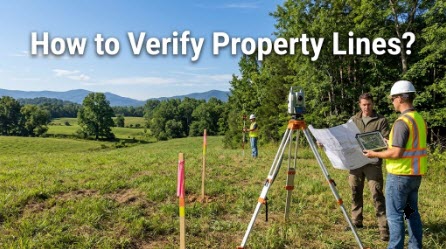
For precise property lines, we highly recommend using specialized tools like LandGlide or onX Maps. These apps track exactly where you are standing relative to the parcel boundaries.
Make sure to drop a pin on the property coordinates while you still have Wi-Fi so you don’t get lost in a dead zone.
Step 3: Dress for the Dirt
Leave the sandals and clean sneakers at home. Instead, wear sturdy, closed-toe boots and long pants to protect against brush and briars. Finally, don’t forget to bring a bottle of water. You are essentially going on a mini-hike!
Step 4: Look for the Essentials Onsite
While you are walking the property, keep an eye out for these key factors:
-
Terrain: Is the ground flat, gently sloping, or a steep cliff?
-
Access: Is there a clear dirt road leading up to it, or will you need to clear a path?
-
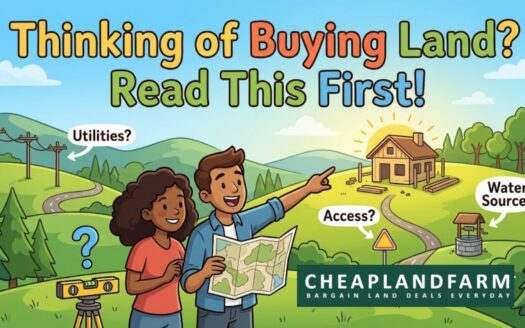
Utility Signs: Look down the nearest main road. Can you see power lines, or will you need to plan for a fully off-grid solar setup?
Your Next Steps
Ready to start your search? Understanding how to navigate land on your own is one of the most important parts of a successful land buying process.
Before you hit the road, make sure you know exactly what questions to ask.
First, check out our guide on How To Find Land Fast: 5 Pillars Of A Focused Search Strategy. After that, learn How To Conduct A Thorough Due Diligence Before Buying Land so you can buy your dream property with total confidence!